
Sculptural Relief Paintings Shaped by Hand
Sculptural relief paintings are wall artworks in which layers of plaster are built up and shaped so the surface rises, dips and ripples. Instead of showing a picture that sits flat on the wall, the piece becomes a physical object, and the shadows across it change from morning to night. This collection brings together ArtiQuo's textured and plaster pieces in black, white and soft neutral tones, along with a few colourful designs for rooms that want more energy. Each painting on this page is described on its product page as hand-painted by an ArtiQuo artist, and prices start from $209. Below you will find a guide to how relief art works, how to choose a size and a frame, how to hang it, and what to expect from delivery and returns.
What makes a painting sculptural
A flat print reproduces an image. A relief painting is built. The artist applies plaster in layers, drags tools through it, and lets ridges, hollows and soft edges set into the surface. The texture is the subject, and two people looking at the same piece from different spots in a room will notice different things because the surface reads differently from every angle.
That is also why photographs understate relief art. A camera flattens depth that your eye reads easily as you walk past. If a listing photo looks calm, expect the piece in person to feel richer, with more movement in the shadows than the picture can show.
Three qualities define the style:
- Physical depth. Raised areas catch light while recessed areas hold shadow, so the artwork has a front, a back and a middle ground.
- Restraint. Most pieces use one tone or a small family of tones. With little colour to compete, the eye follows the surface itself.
- Organic rhythm. Ridges, sweeps and gentle waves direct your eye across the wall in a way a straight edge or a printed pattern cannot.

How light changes the piece
Relief art looks different at nine in the morning than it does at six in the evening. Light that arrives from the side, such as a window on an adjacent wall, stretches the shadows and makes ridges look deeper. Light from directly in front flattens them. Place a piece where the light arrives at an angle and the wall changes through the day without any extra effort from you.
Artificial light works the same way. A wall lamp or a picture light mounted above the frame and angled across the surface gives the strongest evening effect. A ceiling spotlight pointing straight at the wall will wash out the texture, so move the beam sideways if you can.
Colour temperature matters as well. Warm bulbs, around 2700 K, make white and beige plaster feel soft and golden. Cooler bulbs, around 4000 K, keep black and grey pieces crisp. If you are choosing between two pieces for a room that gets little daylight, pick the one with deeper ridges, because it will hold shadow even in dim light.
Featured pieces in this collection
Prices below are the "from" prices shown on each product page. The final price depends on the size and frame style you choose.

From $219. A monochrome piece with subtle surface variations, suited to industrial, Scandinavian and gallery-style rooms.

From $269. Two white canvases that hang as a pair, a good fit for the wall above a bed or a console table.

From $209. The entry point to the collection, offered in 15 sizes from 20" x 24" up to 50" x 100".

From $219. Another layered plaster design, useful when you want texture without strong colour.

From $219. A single white canvas that brightens a wall and shows its shadows clearly in side light.

From $219. A plaster piece that shares its name with P197 and P199, so the three are easy to group. Compare them side by side before you order.

From $219. A colour-led option for a room that is otherwise quiet, such as a neutral hallway.

From $369. Three panels that read as one wide composition, offered in 16 combined sizes up to 120" x 60".
Choosing a piece for your room
The right piece depends less on taste than on the wall, the light and what the room is used for. Use the notes below as a starting point, then check the size chart in the next section.
Living room
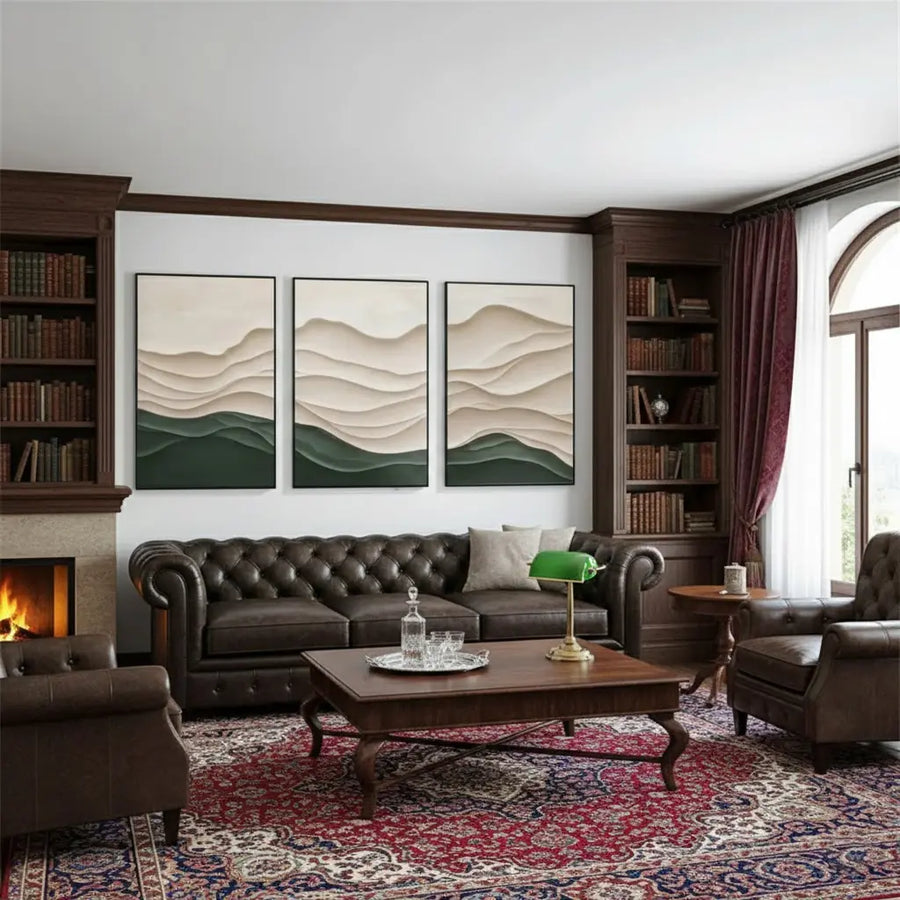
Above a sofa, one large piece usually beats several small ones. Aim for a width of roughly two thirds of the sofa, centred, with the centre of the artwork near eye level, about 145 cm (57 in) from the floor. Leave 15 to 25 cm (6 to 10 in) between the back cushions and the bottom edge of the frame so the piece does not feel crowded. A black or deep plaster surface anchors a pale wall, while a white piece keeps a dark wall from feeling heavy.
Bedroom
Choose softer, lower-contrast surfaces above the headboard. Calm shadows suit a room you want to wind down in, and a set of two works well when the bed is wide. Hang the artwork so its lower edge sits 15 to 20 cm (6 to 8 in) above the headboard, and keep the width to about two thirds of the bed so the wall still has breathing room on either side.
Entryway and hallway
Narrow walls suit tall pieces, and a hallway is often lit from one end, which is ideal for relief art. Because people pass the artwork at an angle, they see the depth immediately. Keep the piece clear of door swings and coat hooks, and check that there is at least 90 cm (35 in) of walking space in front of it.
Size guide with real dimensions
ArtiQuo offers many sizes on each design, and the list differs by product. The table shows the sizes available on three pieces in this collection, so you can see how the range works. Always confirm the sizes on the product page of the exact piece you want, because they can change.
| Piece | Number of sizes | Smallest | Largest |
|---|---|---|---|
| Plaster Art Minimalist Textured Painting #P197 (single canvas) | 15 | 20" x 24" (51 x 61 cm) | 50" x 100" (127 x 254 cm) |
| Black Minimalist Textured Painting Canvas #P192 (single canvas) | 13 | 24" x 20" (61 x 51 cm) | 80" x 60" (203 x 153 cm) |
| Minimalist Textured Set of 3 Canvas Art #P207 (three panels) | 16 | 48" x 20" overall (three 16" x 20" panels) | 120" x 60" overall (three 40" x 60" panels) |
A few practical rules help you pick between them:
- Small wall or shelf area: choose 20" to 30" on the long side. These sizes work above a console, a desk or a bedside lamp.
- Standard sofa or bed: choose 36" to 48" on the long side for a single piece. This is the range most homes use.
- Large feature wall: choose 60" or more, or a three-panel set. Wide walls look better with one dominant piece than with several small ones.
- Sets of three: measure the overall width, not the panel width. A set listed as 72" x 32" covers 72 inches across, with the gaps between panels included in the composition.
If you are unsure, cut a piece of paper or painter's tape to the overall size and stick it to the wall for a day. Seeing the footprint in your own light is the fastest way to avoid a size you regret.
Frame styles and finishes
Product pages offer six finishing options: Rolled Canvas, Black Frame, Silver Frame, White Frame, Wood Frame and Gold Frame. Choosing one changes how the piece sits on the wall, so decide with the room in mind.

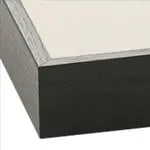
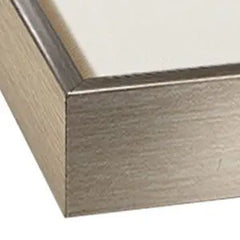
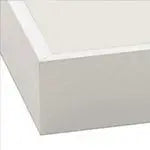
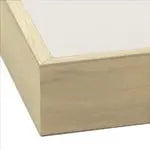
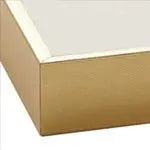
- Rolled Canvas is the unframed option. It suits buyers who already have a framer they trust, or who want to stretch the canvas themselves.
- Black Frame sharpens the outline of light and white pieces and gives a gallery look to darker ones.
- White Frame blends into a pale wall, so the texture does all the talking.
- Wood Frame adds warmth and suits natural, earthy interiors.
- Silver Frame works with cool palettes, steel fittings and grey walls.
- Gold Frame brings a classic note and looks best on deep or neutral pieces in rooms with warm light.
As a rule of thumb, match the frame to a fixed element already in the room, such as window frames, lamp bases or furniture legs. That single link makes the piece look planned rather than added later.
Shop by palette
Start with the tone your room already uses, then let the texture do the work. Each link below opens a collection sorted by colour.
- Soft sand and taupe pieces for warm, quiet rooms and natural materials such as linen and oak.
- Deep, high-contrast pieces for pale walls, industrial spaces and rooms with large windows.
- Light, airy pieces for small rooms and dark walls that need lifting.
- Earthy, imperfect-by-design pieces for homes that value handmade character over polish.
- Colour-led designs for rooms where the artwork should be the focal point.
Styling ideas that work
Group by surface, not by colour. Two or three pieces with the same texture and different sizes read as one composition. Leave 5 to 8 cm (2 to 3 in) between frames, and align either the top edges or the centre line so the group looks deliberate.
Let one piece lead. If the room already has patterned rugs, striped cushions or a busy bookshelf, a single large plaster piece with a calm surface gives the eye somewhere to rest.
Lean, do not always hang. A smaller piece can stand on a sideboard, a mantel or a deep shelf, leaning against the wall. Add a stack of books or a ceramic bowl beside it to build layers of height.
Mix tones within a family. Black, charcoal and warm grey sit well together. White, cream and sand do the same. Crossing families, for example black beside beige, needs a shared element such as a frame colour to hold them together.
How to hang it
Framed orders include multi-directional hanging hardware and the necessary mounting tools, so you can install the piece in either a vertical or a horizontal orientation. That matters for abstract and texture-led designs, because many of them read well both ways. Try each orientation on the floor against the wall before you drive a single screw.

- Choose the height. Mark the centre of the artwork about 145 cm (57 in) from the floor. If it hangs over furniture, keep the lower edge 15 to 25 cm (6 to 10 in) above the piece below it.
- Find the wall type. Knock lightly. A solid, dull sound usually means a stud or masonry. A hollow sound means plasterboard.
- Pick the right fixing. Use anchors or screws rated for more than the weight of the piece, and fasten to a stud where possible. For plasterboard, choose a toggle or molly anchor. Large sizes carry more weight, so check the product page before you order.
- Use two fixing points. Two points keep a wide piece level and stop it from tilting over time.
- Check level and step back. Place a small level on the top edge, hang the piece, then view it from the doorway to confirm the height feels right.
For rolled canvas orders, plan the framing first. Have the canvas stretched or framed before you hang it, and tell the framer that the surface is textured so they avoid pressing on the ridges.
Caring for a relief surface
Plaster surfaces are durable in a normal home, but they do not like moisture or rough handling. A few habits keep them looking new.
- Dust with a soft dry brush or a microfibre cloth, moving along the ridges rather than across them.
- Avoid damp cloths, cleaning sprays and steam, because moisture can mark or soften plaster.
- Keep the piece out of bathrooms with steamy showers, and away from radiators, ovens and heaters.
- Clean it every few weeks if it hangs in a busy room, such as a kitchen-adjacent dining area.
- When moving or storing the piece, wrap it in a clean cloth and carry it by the frame, not by the textured face.
Custom sizes, texture depth and colour tone
Many designs can be adjusted in size, texture depth or colour tone. ArtiQuo describes its custom service as a process that runs "from concept to completion", with updates and chances to give feedback at each phase. Customization is offered on selected products only, so ask about the specific piece you have in mind.
To start a request, share your idea, your wall dimensions and a photo of the room if you have one. A few details make the brief easier to answer:
- The overall size you want, in inches or centimetres.
- Whether you need a single canvas or a set of two or three panels.
- The tone you are matching, such as a wall colour or a sofa fabric.
- How deep you want the texture to feel, from soft and calm to strong and sculptural.
- Your preferred finish: rolled canvas or one of the five frame styles.
You can reach the team through the contact page, by email at support@artiquo.com, or by phone on +1 307 310 8724. Made-to-order items take an additional 2 to 5 business days to produce, and delivery times start once the customization is complete. Customized and personalized items are not eligible for return, so confirm every detail before you approve the work.

Delivery, returns and quality checks
ArtiQuo currently ships within the United States only. International shipping is not offered at this time. Standard orders ship within 1 to 2 business days, Monday to Friday, excluding weekends and public holidays. Before shipping, each order goes through a quality inspection.
| Option | Cost | Estimated delivery after shipping |
|---|---|---|
| Free Shipping | Free | 6 to 9 business days |
| Express Shipping | $5.99 | 3 to 5 business days |
Shipping charges are shown at checkout, and made-to-order pieces add 2 to 5 business days of production before the delivery clock starts.

Returns. You can request a return within 30 days of receiving your order. The item must be unused, in its original condition and packaging, and you need proof of purchase. Contact support for authorization before you send anything back, because returns sent without approval may not be accepted. Customers pay return shipping unless the item is defective, damaged or incorrect on arrival, and a $2.99 restocking fee may apply to approved returns. Once the return is received and inspected, approved refunds go back to the original payment method within 5 business days.
Frequently asked questions
What is a sculptural relief painting?
A sculptural relief painting is a wall artwork whose surface is built up in layers, usually plaster, so parts of it rise from the background. The raised areas catch light and cast shadows, giving the piece real depth that a flat print cannot reproduce.
How do I hang a heavy relief painting?
Use wall anchors or screws rated for more than the piece's weight, and fasten to a stud where possible. For plasterboard, choose a toggle or molly anchor. Check the weight of your chosen piece first, then hang it with two fixing points so it stays level.
What size should I choose for above a sofa?
Choose a width of about two thirds of the sofa. Centre it, and hang it 15 to 25 cm (6 to 10 in) above the back cushions. For a wide wall, a set of two or three smaller pieces with the same surface can work better than one very large piece.
Does lighting really change how a relief painting looks?
Yes. Light that arrives from the side lengthens the shadows and makes the ridges look deeper, while light from directly in front flattens them. A wall lamp or picture light angled across the surface gives the strongest effect in the evening.
How do I clean a textured plaster surface?
Dust it with a soft dry brush or a microfibre cloth, moving along the ridges. Avoid damp cloths, sprays and steam, because moisture can mark or soften plaster. Clean it every few weeks if it hangs in a busy room.
Can I order a custom size or colour?
Yes, on selected products. Many designs can be adjusted in size, texture depth or colour tone. Contact ArtiQuo with your idea and dimensions, and expect an additional 2 to 5 business days of production before delivery begins. Customized items cannot be returned.
How long does delivery take?
Standard orders ship within 1 to 2 business days. Free Shipping then takes an estimated 6 to 9 business days, and Express Shipping at $5.99 takes 3 to 5 business days. ArtiQuo ships within the United States only.
What is the return policy?
You can request a return within 30 days of receiving your order, provided the item is unused and in its original packaging. Contact support first for authorization. Refunds are processed within 5 business days after the return is inspected, and customized items are not eligible.
Bring texture to your wall
A relief painting turns a blank wall into something you notice every day, because it never looks quite the same twice. Browse the collection above, compare sizes against your wall, and choose a finish that suits the room. If you want something made to your dimensions, contact the studio and describe the space. The team can tell you what is possible before you commit.