

What Is Wabi Sabi Art? The Beauty of Imperfect, Handmade Wall Decor

Walk into a room styled with wabi sabi art and you'll notice something before you can name it: a stillness. A softness. A surface that doesn't try too hard. In a world of glossy, mass-produced décor, wabi sabi art has become one of the most searched-for aesthetics in modern interior design — and for good reason. It offers something algorithm-driven trends can't: authenticity.
If you've been wondering what wabi sabi art actually is, why designers keep pairing it with minimalist and Japandi interiors, and how handmade wall decor fits into this philosophy, this guide breaks it all down — from its Japanese roots to how to choose the right piece for your own walls.
What Is Wabi Sabi? Understanding the Philosophy
Wabi sabi (侘寂) is a centuries-old Japanese aesthetic and spiritual philosophy built on two ideas:
- Wabi — the beauty found in simplicity, quietness, and humility.
- Sabi — the beauty that comes with age, wear, and the passage of time.
Together, wabi sabi teaches acceptance of transience and imperfection. Instead of chasing symmetry, flawlessness, and permanence — values that dominate Western design and mass manufacturing — wabi sabi finds meaning in cracks, asymmetry, muted tones, and organic, unrefined textures.
This isn't a design "trend" in the traditional sense. It's a mindset. And that mindset has quietly reshaped how people think about the objects — and art — they bring into their homes.
What Makes Art "Wabi Sabi"?
Not every neutral-toned painting qualifies as wabi sabi. True wabi sabi art tends to share a few defining qualities:
- Raw, natural materials — lime plaster, raw canvas, clay, sand, and organic pigments rather than synthetic finishes.
- Visible texture — layered, cracked, or uneven surfaces that catch light differently throughout the day.
- Muted, earthy palettes — soft whites, warm greys, sandy taupes, and deep charcoals rather than bold, saturated color.
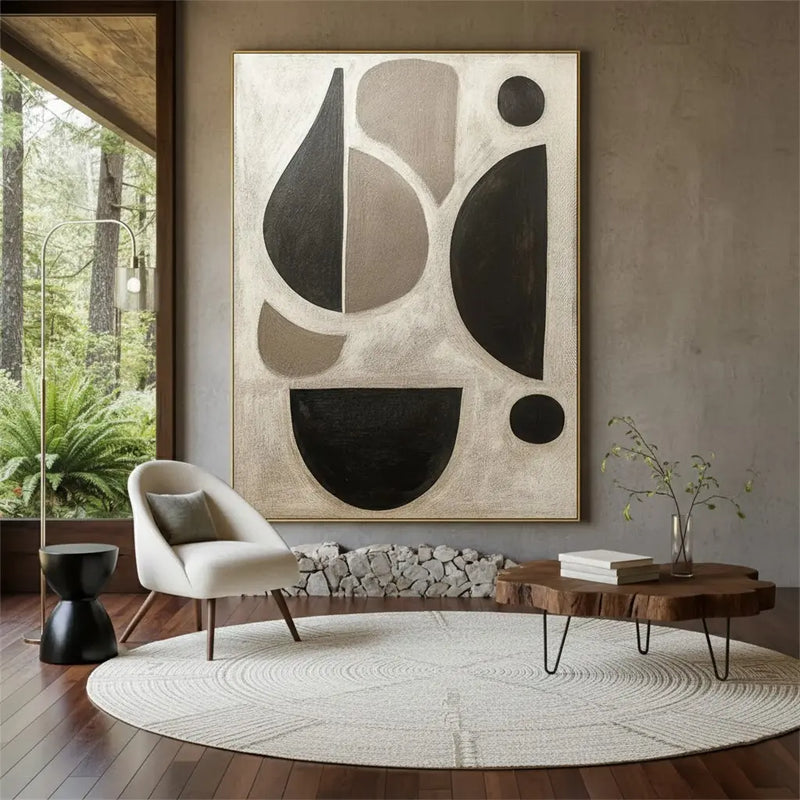
- Asymmetry over symmetry — organic shapes and imperfect lines instead of precise, repeated patterns.
- A handmade, one-of-a-kind quality — because true wabi sabi can't be mass-reproduced. Every brushstroke and plaster crack is shaped by chance, not by a machine.
This is exactly why wabi sabi art is almost always handmade. A printed canvas can imitate the look of texture, but it can't replicate the process — the slow, imperfect, human decision-making that gives each piece its character.
Why Handmade Wall Decor Matters in Wabi Sabi Art
In an age of printed canvases and factory-produced décor, handcrafted wall art has become something genuinely rare. Every handmade wabi sabi piece is shaped individually — no two are ever exactly alike, because true handcraft simply doesn't allow for exact repetition.
A plaster surface cures and cracks in its own rhythm. A pigment mixed in a small batch will shift subtly from one canvas to the next. This unpredictability isn't a flaw — it is the point. It's what separates an original piece from a reproduction that thousands of other homes might also own.
When wabi sabi wall art is handmade, you're not just filling wall space — you're bringing in something that exists nowhere else in the world.
Where Wabi Sabi Wall Art Works Best
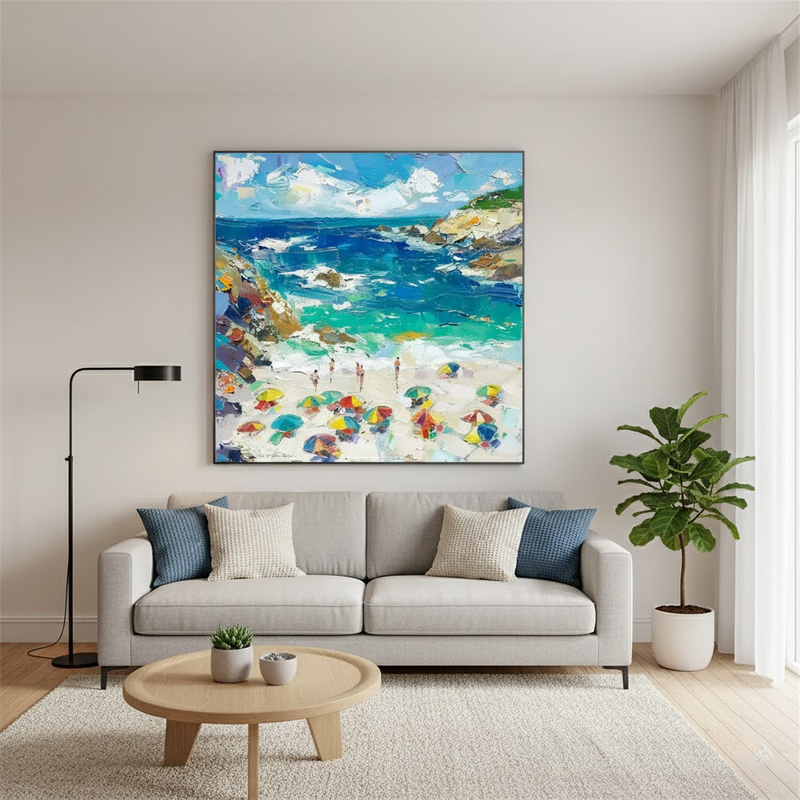
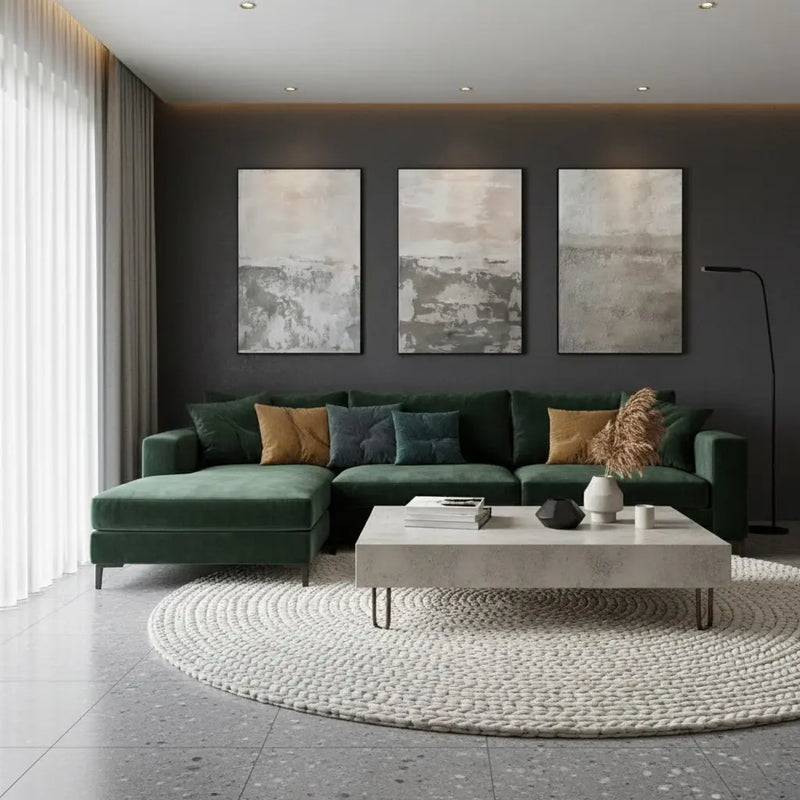
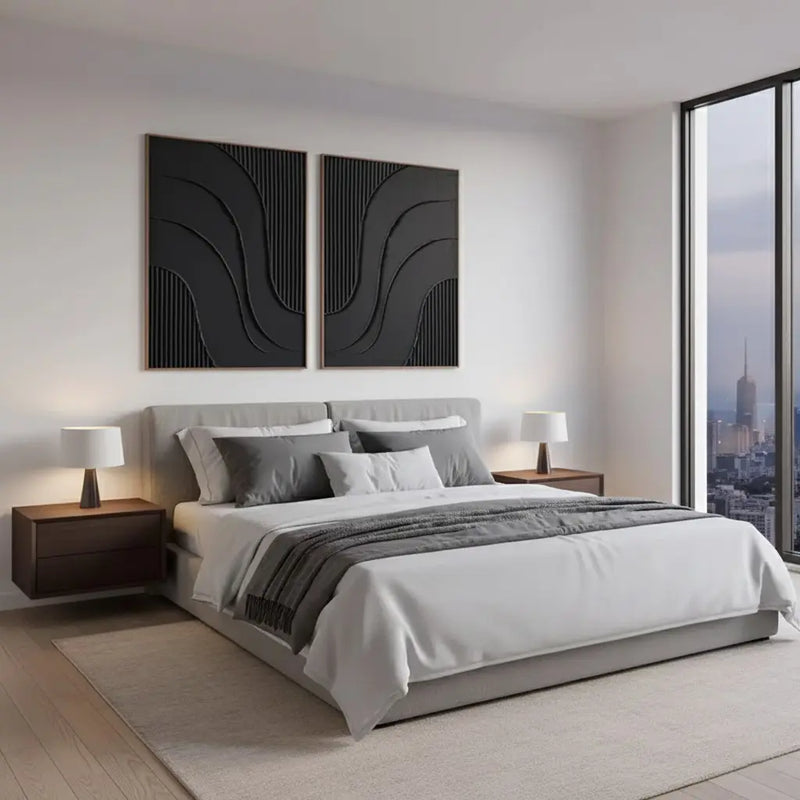
Wabi sabi and abstract wall art pair naturally with minimalist, Scandinavian, Japandi, and organic modern interiors, because its neutral, earthy tones enhance a space rather than compete with it. Popular placements include:
- Living rooms — as a grounding focal point above a sofa or console.
- Bedrooms — adding texture and calm without visual noise.
- Entryways — setting an intentional tone the moment guests arrive.
- Home offices — softening spaces that can otherwise feel sterile.
- Dining rooms — anchoring a space where people gather and linger.
How to Choose the Right Wabi Sabi Piece for Your Home
1. Think about mood, not just color. Decide what you want the room to feel like — wabi sabi textures tend to bring stillness, while more dynamic abstract brushwork adds energy.
2. Consider scale before pattern. In modern spaces, one large piece typically has more visual impact than several small ones.
3. Let texture lead in minimalist rooms. A heavily textured plaster piece adds depth to a space that might otherwise feel flat.
4. Trust the imperfections. A crack, an uneven edge, or a raw, unfinished-looking surface isn't a flaw to second-guess — it's the wabi sabi spirit doing exactly what it's meant to do.
Caring for Handmade, Textured Wall Art
Because wabi sabi pieces often use natural, raw materials like plaster and clay, a little care goes a long way:
- Keep pieces away from direct moisture and high-humidity rooms.
- Dust gently with a soft, dry cloth.
- Avoid harsh cleaning products on textured or plaster surfaces.
Frequently Asked Questions
Is wabi sabi art the same as minimalist art?
Not exactly. Minimalist art focuses on simplicity and clean lines, while wabi sabi art embraces texture, imperfection, and the beauty of aging materials. The two styles often overlap but come from different philosophies.
Is each piece of handmade wabi sabi art really one of a kind?
Yes. Because these pieces are shaped by hand using natural materials, no two works are ever exactly alike — even within the same collection or color palette.
What materials are typically used in wabi sabi wall art?
Common materials include raw canvas, natural lime plaster, organic pigments, clay, and sand — all chosen for how gracefully they age over time.
Will wabi sabi art match my existing home décor?
Because the palette is built around neutral, earthy, muted tones, wabi sabi art complements a wide range of interiors, from warm minimalism to cool Scandinavian styling.
Can wabi sabi wall art be customized to fit my space?
Many handmade pieces can be adapted to specific wall dimensions or color needs — it's worth reaching out to the artist or studio directly to discuss custom options.
Conclusion
Wabi sabi art isn't about decorating a wall — it's about inviting a philosophy into your home. It's a quiet rejection of perfection for perfection's sake, and an embrace of texture, character, and things that were clearly made by human hands. If you're drawn to interiors that feel grounded, authentic, and a little imperfect in the best way, handmade wabi sabi wall art might be exactly what your space has been missing.
Ready to bring wabi sabi into your home? Explore the full handcrafted Wabi Sabi & Abstract Wall Art collection at ArtiQuo and find the piece that was made to live on your wall.