

Wabi Sabi Wall Art: Handmade & One-of-a-Kind
The ArtiQuo Journal
Wabi Sabi Wall Art: Handmade & One-of-a-Kind
Why a philosophy built on cracks, texture, and imperfection has become the quiet standard for how modern homes want to feel.
There's a moment almost everyone has had: standing in front of a bare wall at home and sensing that something is missing. Not the paint, not the furniture — something less tangible. That missing piece is often soul. And this is exactly where wabi sabi wall art steps in, not as another decoration to check off a list, but as a quiet statement about how you want a room, and a life, to feel.
If you're searching for wall art that doesn't look like it came off the same production line as everyone else's, this guide walks through the philosophy, the materials, and the reasoning behind why handmade wabi sabi pieces are becoming the piece modern homeowners reach for first.
What Wabi Sabi Actually Means
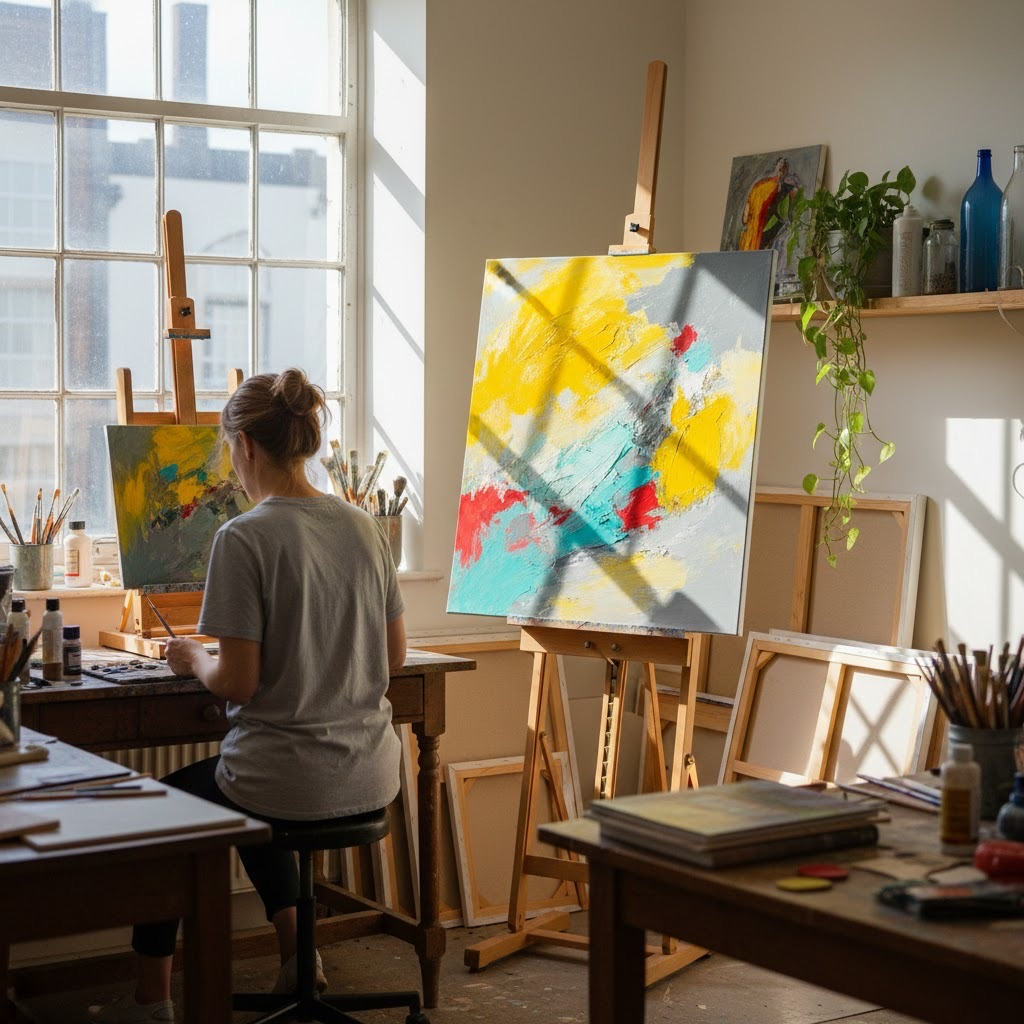
Before going further into wall art itself, it's worth slowing down on where this idea comes from. Wabi sabi is a Japanese way of seeing the world that grew out of Zen Buddhist thought. It teaches acceptance of imperfection, impermanence, and simplicity. Real beauty, in this view, isn't found in flawless symmetry — it's found in a crack, a rough edge, a surface that has clearly been touched by time and by hand.
That's a direct contrast to the polished, mass-produced look that has dominated home décor for decades. Wabi sabi asks you to slow down. To notice the crack instead of covering it up. To find a weathered surface more compelling than a brand-new one.
Why the Philosophy Fits So Naturally in Modern Homes
Modern interiors are often clean to the point of feeling cold — straight lines, neutral tones, minimal furniture. Wabi sabi wall art becomes the counterweight. It brings warmth without breaking the simplicity. It adds character without shouting for attention.
Why Handmade Work Carries Real Value
In a market saturated with printed canvases and factory décor, a genuinely handmade piece has become something rare — almost radical. Every work is shaped individually, using natural materials and a real respect for asymmetry and organic form.
No two pieces are ever the same, and not as a marketing trick. True handcraft simply doesn't allow for exact repetition. A brushstroke made today can't be recreated exactly tomorrow. A plaster surface will crack, settle, and cure on its own timeline — one that can't be fully controlled by the person making it. That unpredictability isn't a flaw in the process. It is the process, and it's what separates an original piece from a print that a thousand other homes might also own.
The Materials Behind the Art
Most pieces begin with a careful selection of natural materials — raw canvas, lime plaster, natural pigments, clay, sand, and other organic textures chosen not just for how they look, but for how they age. Wabi sabi art isn't meant to look "finished" in the conventional sense. It's meant to look alive, still evolving, still connected to the natural materials it came from.
Layers are built slowly. Texture is added, taken away, reshaped by hand. Pigments are mixed in small batches, which means even the "same" color shade will shift a little from one piece to the next. This is time-intensive by design, because rushing an organic material never produces an organic result.
Designed for Modern Living
Modern homes need more than furniture and function — they need atmosphere. A blank wall isn't empty space; it's an opportunity to set the tone for an entire room.
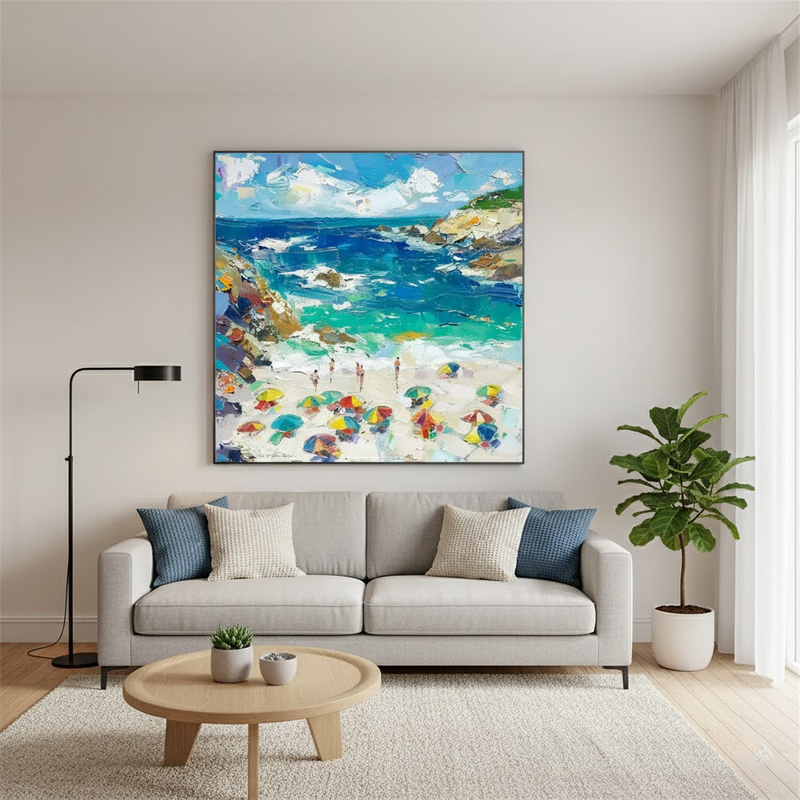
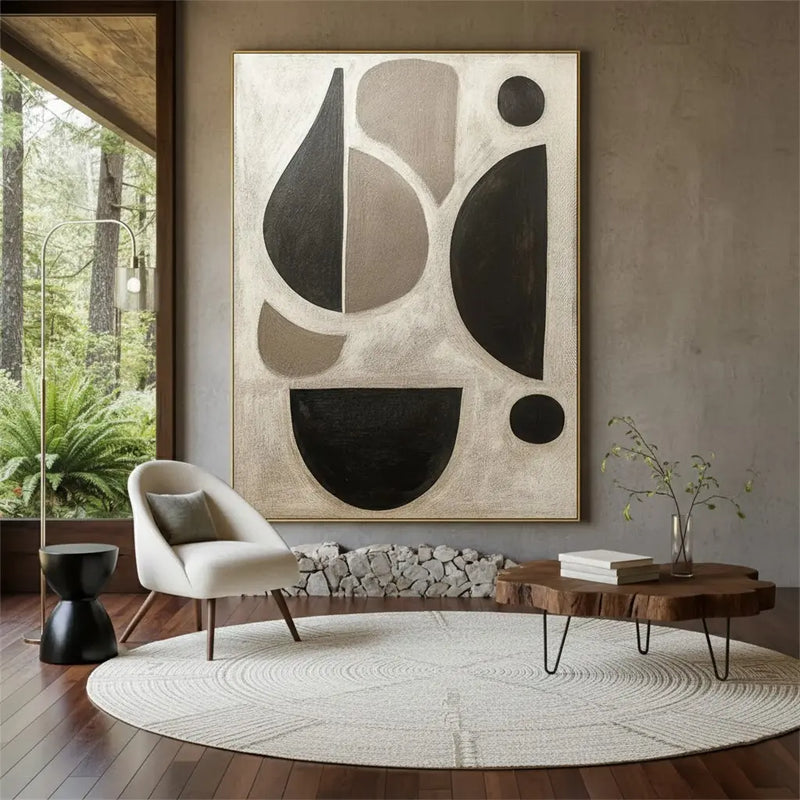
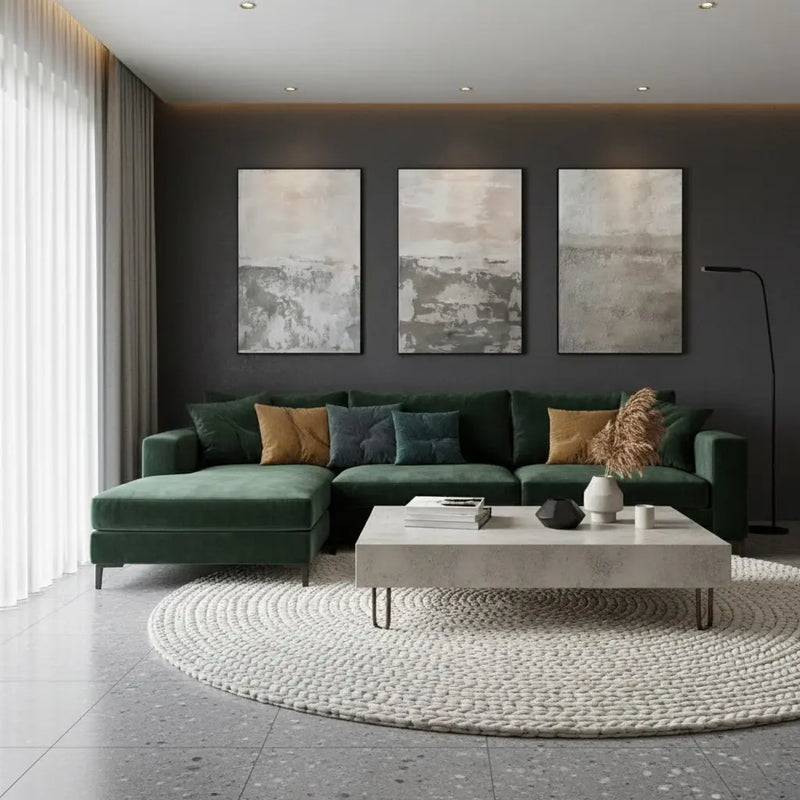
Wabi sabi wall art tends to slot easily into contemporary interiors. Its neutral, earthy palette — soft whites, warm greys, sandy taupes, deep charcoal, muted ochre — means each piece complements minimalist, Scandinavian, Japandi, and organic-modern interiors without competing with anything else in the room.
Where a Piece Like This Belongs in Your Home
- Living rooms — a grounding focal point above a sofa or console, softening the hard lines of modern furniture.
- Bedrooms — texture and calm in a space meant for rest, without adding visual noise.
- Entryways — setting the tone the moment someone walks through the door.
- Home offices — warmth and depth in a space that can otherwise feel sterile.
- Dining rooms — a conversation-worthy anchor for a room where people gather.
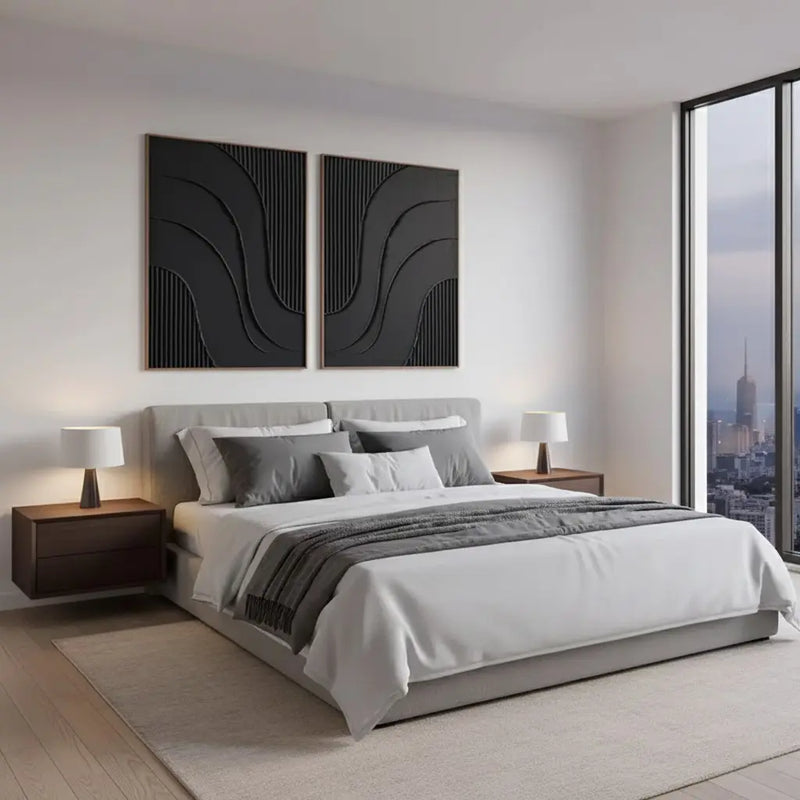
Because these pieces lean on natural, muted tones rather than trend-driven color, they tend not to date the way fast décor does. Wabi sabi art ages the way its materials do — gracefully.
Abstract and Wabi Sabi: Two Languages That Work Together
Wabi sabi teaches acceptance of imperfection. Abstract art adds a second layer: interpretation. An abstract piece doesn't tell you what to see — it invites you to bring your own mood, your own story, into the work.
Put the two together, and you get a visual language that feels personal and calming at the same time. That combination is exactly why so many wabi sabi and abstract pairings end up as the one piece a whole room is built around.
How Color and Texture Work Together
In wabi sabi work, color rarely sits flat or solid. Subtle gradients, imperfect brush marks, and layers that look intentionally unfinished create real depth. Daylight hitting a textured plaster surface throws different shadows throughout the day — the same piece can look slightly different depending on when you glance at it.
Why Choose Handcrafted Original Art
- One-of-a-kind — each piece is made individually by hand; nothing here is duplicated.
- Texture-rich materials — natural plaster, raw canvas, and organic pigments that reward a closer look.
- Neutral, versatile palettes — tones chosen to blend into modern, minimalist, and organic interiors.
- Made with intention — slow, deliberate craftsmanship over fast production.
- A statement of character — art that reflects individuality rather than a passing trend.
- Built to age beautifully — designed to develop character over time, not lose it.
- A thoughtful process — small-batch creation means less waste and more meaning behind each piece.
Choosing handcrafted art isn't just decorating a wall. It's a quiet statement about what you value — authenticity, craftsmanship, and a kind of beauty that can't be rushed.
How to Choose the Right Piece for Your Home
Think About Mood, Not Just Color
Ask what you want a room to feel like — calm and grounded, or bold and energizing. Wabi sabi pieces tend to bring stillness; more dynamic abstract works add energy and movement.
Consider Scale Before Pattern
One large piece usually has more impact in a modern space than several small ones scattered around. When in doubt, size up.
Let Texture Do the Talking
In minimalist spaces, texture becomes the star. A heavily textured plaster piece can add depth to a room that might otherwise feel flat.
Trust the Imperfections
If a piece has a crack, an uneven edge, or a raw, unfinished-looking surface — that's not a flaw to second-guess. That's wabi sabi doing exactly what it's meant to do.
Caring for Textured, Handmade Pieces
Wabi sabi celebrates the process of aging, but that doesn't mean care can be skipped altogether. Keep pieces away from direct moisture and high-humidity rooms. Dust gently with a soft, dry cloth. Avoid harsh cleaning products on textured surfaces, since they can strip the natural pigment layers that were built up so carefully.
With this kind of simple care, a handmade piece can easily last for decades — and, true to the philosophy behind it, often looks even better with time.
Bring Home Something Real
In a world of endless scrolling, fast trends, and disposable décor, there's something genuinely powerful about choosing art that was made slowly, by hand, with intention. Wabi sabi wall art isn't just about filling a blank wall. It's about inviting authenticity, texture, and stillness into the rooms where you actually live your life.
A wall that used to feel empty can become a daily reminder that real beauty doesn't need to be perfect — it just needs to be honest. That's what every handmade wabi sabi piece offers: something you can see, touch, and feel a little differently every single day.
Shop the Wabi Sabi CollectionFrequently Asked Questions
What makes wabi sabi wall art different from ordinary abstract art?
Wabi sabi puts imperfection, natural texture, and the aging process at the center of the work itself, while general abstract art usually focuses more on form and color without that underlying philosophy.
Does wabi sabi wall art work with every interior style?
Its neutral, earthy palette makes it flexible enough for minimalist, Scandinavian, Japandi, and organic-modern spaces. Even in a bolder, more maximalist room, one piece can still work as a calming visual counterweight.
How long does it take to make one handmade wabi sabi piece?
Because natural materials need time to settle and cure, the process usually takes longer than a printed piece — anywhere from a few days to a few weeks, depending on how textured the surface is.
Can a piece be customized to fit my wall or color scheme?
Many artists offer custom sizing and palette options so a piece can be matched to a specific wall or room's existing tones.
Is textured art more fragile than a regular painting?
Not when it's cared for properly. Kept away from excess moisture and dusted gently, textured pieces tend to hold up well and, true to the philosophy, often become more visually interesting with age.