

Wabi Sabi Wall Art: The Beauty of Imperfect, Handcrafted Original
ArtiQuo Journal — Wabi Sabi Art
What Is Wabi Sabi Wall Art?
Wabi sabi is a Japanese aesthetic philosophy that finds beauty in imperfection, impermanence, and simplicity. Applied to wall art, it means pieces that embrace organic textures, muted tones, asymmetry, and visible traces of the artist's hand — rather than the flawless, mass-produced look most decor chases.
Where a factory print aims for perfect symmetry and uniform color, a wabi sabi piece might have uneven brushstrokes, raw edges, or a slightly off-center composition — and that's the point. The philosophy holds that nothing in nature is perfect, permanent, or complete, and art that reflects this feels more honest, more alive, and more human.
For homeowners and designers, this translates into pieces that:
- Use natural, earthy materials — think handmade paper, raw canvas, clay, linen, or reclaimed wood
- Favor neutral, weathered palettes — sand, stone, charcoal, rust, and muted greens
- Show the artist's process — brush drag, texture, cracks, or asymmetry left intentionally visible
- Feel calm rather than loud — the goal is a quiet focal point, not a statement piece screaming for attention
If you've ever walked into a space and felt an immediate sense of calm without being able to say exactly why, there's a good chance wabi sabi principles were at work — often through the wall art.
Why Handcrafted Originals Matter
Mass production and wabi sabi are, almost by definition, at odds. A printed reproduction can imitate the look of texture, but it can't replicate the physical depth of a hand-applied medium — the slight ridge of dried plaster, the variation in ink absorption on handmade paper, the subtle unevenness that only occurs when a human hand made every mark.
This is why original, handcrafted pieces sit at the center of authentic wabi sabi design:
- Each piece is genuinely one-of-a-kind. No two originals are identical, even within the same series, because the process itself introduces natural variation.
- Materials carry their own history. Reclaimed wood, aged linen, or raw clay each bring texture and character that can't be synthesized.
- The artist's hand is part of the story. Collectors and designers increasingly value knowing who made a piece and how — it's part of what gives the work meaning.
- Longevity and patina. Many wabi sabi materials are designed to age visibly and gracefully, developing more character over years rather than looking worn out.
How to Choose Wabi Sabi Wall Art for Your Space
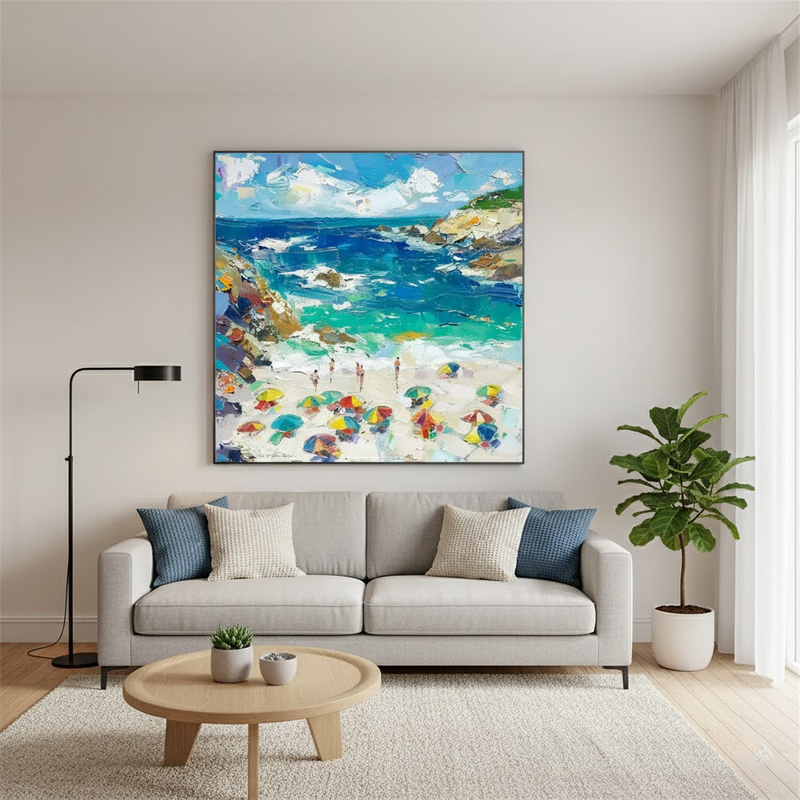
Choosing a piece isn't about matching your sofa fabric — it's about finding something that fits the emotional register of the room. A few practical considerations:
1. Start with the room's existing materials
Wabi sabi art tends to pair naturally with spaces that already lean toward natural materials — wood, stone, linen, unlacquered metal. If your room is already heavy on glossy, high-contrast modern finishes, a single textured piece can act as a grounding counterpoint rather than getting lost.
2. Consider scale before color
Because palettes are often muted, scale does more visual work than in a brightly colored piece. A large-format textured canvas can anchor a living room wall in a way a small print simply can't, even if the colors are quiet.
3. Think about light
Textured, handcrafted pieces respond to light differently throughout the day — raking light in the morning or evening brings out ridges and brushwork that flat overhead lighting flattens out.
4. Let asymmetry breathe
Wabi sabi pieces often look best without a rigid, symmetrical gallery-wall arrangement around them. Give the piece some negative space rather than boxing it in with matching frames.
5. Trust the imperfection
If you find yourself wanting to "fix" an uneven edge or an imperfect line in a piece you're considering, it may not be the right choice — the appeal of these works is precisely that they aren't corrected.
Common Materials and Techniques in Wabi Sabi Art
| Material / Technique | Typical Look | Why It's Used |
|---|---|---|
| Raw or unstretched linen | Soft, slightly uneven surface | Natural texture, ages gracefully |
| Handmade paper | Deckled edges, visible fibers | Emphasizes the handmade, organic quality |
| Mineral or earth pigments | Muted, slightly variable tone | Color shifts subtly with light, unlike flat synthetic pigment |
| Plaster or clay relief | Physical texture, cracks | Adds dimensionality and a sense of age |
| Reclaimed wood panels | Grain, knots, weathering | Carries visible history and material honesty |
| Ink wash / sumi-e influenced technique | Soft gradients, negative space | Reflects impermanence and restraint |
Artists working in this style often deliberately leave "flaws" — a run in the pigment, an unfinished corner, a visible seam — because removing them would remove the piece's honesty.
Where Wabi Sabi Wall Art Works Best
While it's often associated with minimalist or Japandi interiors, wabi sabi pieces are more versatile than they might first appear:
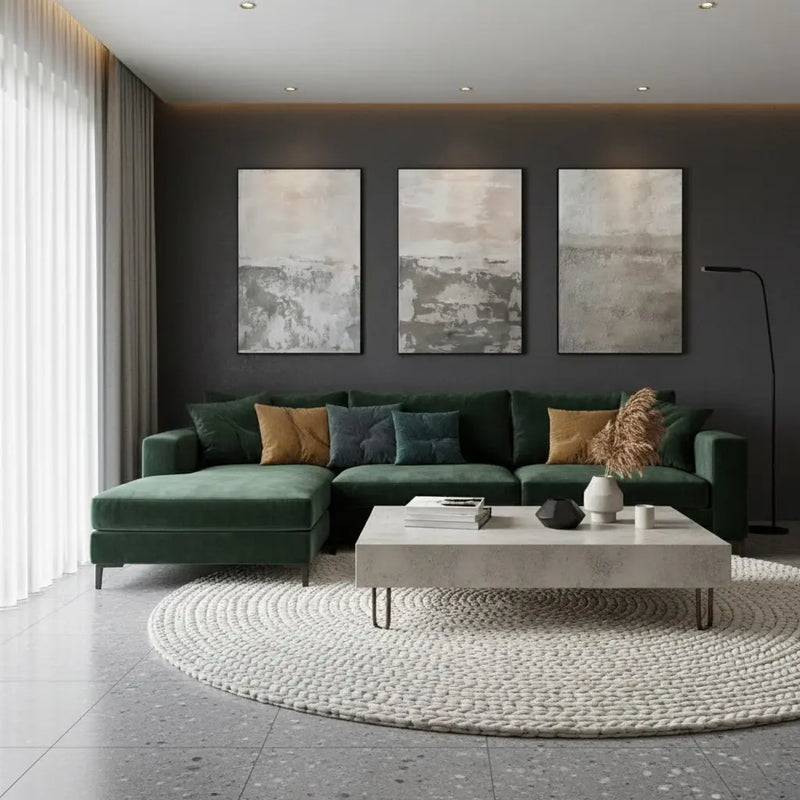
- Living rooms — as a calming focal point above a sofa or mantel, especially in neutral-toned rooms
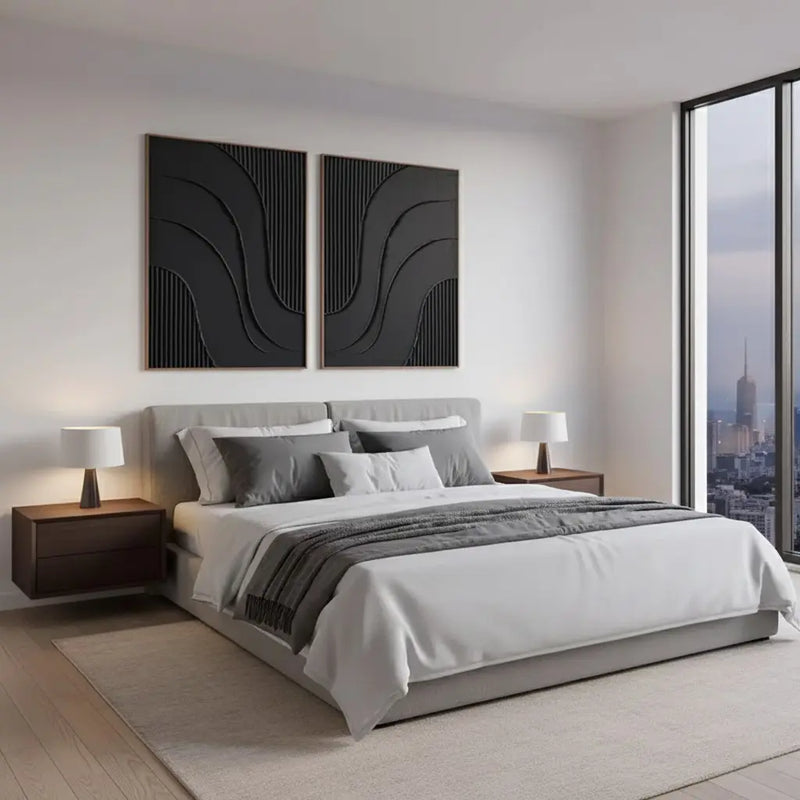
- Bedrooms — muted, textured pieces support a restful atmosphere better than high-contrast or busy art
- Entryways — a single striking textured piece sets a tone of intentionality as soon as someone walks in
- Offices and studios — the quiet, non-distracting quality suits spaces meant for focus
- Hospitality spaces — restaurants and boutique hotels increasingly use wabi sabi-influenced art to create a grounded, considered atmosphere
It tends to work less well in spaces that are already visually loud — bold wallpaper, saturated color schemes, or maximalist collections — since the whole point of the aesthetic is quiet contrast, and it can get visually drowned out.
Caring for Handcrafted, Textured Wall Art
Because these pieces often use raw or natural materials, care differs slightly from framed prints:
- Avoid direct, prolonged sunlight on pieces using natural pigments or raw linen, as fading can occur faster than with UV-protected prints
- Dust gently with a soft, dry brush rather than a cloth, especially on textured or relief surfaces
- Control humidity where possible — materials like handmade paper, plaster, and unfinished wood are more sensitive to moisture swings than sealed prints
- Avoid over-cleaning — much of the piece's character comes from its surface; aggressive cleaning can remove texture along with dust
Frequently Asked Questions
What does "wabi sabi" actually mean?
It's a Japanese concept combining wabi (simplicity, quiet, a kind of rustic humility) and sabi (the beauty that comes with age and the passage of time). Together, they describe finding beauty in things that are imperfect, transient, and incomplete.
Is wabi sabi wall art the same as minimalist art?
Not exactly. Minimalism focuses on reduction and clean geometry. Wabi sabi can be minimal in composition, but its defining feature is texture, imperfection, and a sense of natural age — qualities minimalism often avoids in favor of precision.
Why are handcrafted originals more expensive than prints?
Originals involve the artist's direct time, skill, and materials for a single, non-reproducible piece. A print can be produced thousands of times from one file; an original cannot be replicated at all, which is part of what gives it lasting value.
Does wabi sabi art fit modern interiors, or only traditional Japanese-style rooms?
It fits modern interiors extremely well, particularly Scandinavian, Japandi, and organic-modern styles that already favor natural materials and muted palettes. It's less about a specific era and more about material honesty.
How do I know if a piece is a genuine handcrafted original versus a printed reproduction?
Look closely at the surface: genuine texture (raised plaster, brush ridges, paper fiber) is physically visible, often only up close or at an angle, while a print's texture is usually a flat photographic reproduction. Reputable sellers will also clearly state whether a piece is an original, a limited edition, or a print.
"Handmade. Original. Timeless." — ArtiQuo
Related reading: Abstract Wall Art · 3D Plaster Art · About ArtiQuo · Full FAQ Page