

Wabi Sabi Art for Minimalist Modern Homes
What Is Wabi Sabi Art?
Wabi sabi art is wall art made in the Japanese aesthetic tradition of wabi sabi — the acceptance of transience and imperfection as sources of beauty. Rather than flawless symmetry or a glossy factory finish, wabi sabi pieces feature raw texture, muted earthy tones, asymmetry, and visible traces of the handmaking process, such as cracks, uneven plaster, or organic brushwork. For minimalist modern homes, this makes wabi sabi art a natural counterpoint to clean lines and neutral palettes — it adds soul and tactility to a room without introducing visual clutter.

Why Wabi Sabi Works So Well in Minimalist Interiors
Minimalist design is often mistaken for “empty” or “cold.” In practice, the best minimalist rooms are quiet but not sterile — and that’s exactly the gap wabi sabi art fills.
- Texture replaces pattern. In a room stripped of busy prints, a single textured plaster piece becomes the visual interest.
- Neutral tones match minimalist palettes. Soft whites, warm greys, sandy taupes, and muted ochres — the standard wabi sabi color range — sit comfortably alongside minimalist, Scandinavian, Japandi, and organic modern interiors.
- Imperfection reads as warmth. A cracked or uneven surface signals something made by hand, which softens the hard edges of modern furniture and architecture.
- One statement piece does the work of many. Minimalist rooms favor restraint, and a single large wabi sabi piece can anchor a wall more effectively than several smaller works.
Key Characteristics to Look For
When shopping for wabi sabi wall art, a few defining traits separate authentic pieces from printed reproductions:
- Natural materials — raw canvas, lime plaster, clay, sand, and organic pigments rather than synthetic paint or digital printing.
- Handmade variation — no two pieces are identical, even within the same color series.
- Muted, earthy color stories — tones drawn from stone, clay, and weathered wood rather than saturated or trend-driven colors.
- Tactile surface — raised plaster, brushstroke ridges, or sculptural texture you can see change with the light throughout the day.
Handmade From Start to Finish
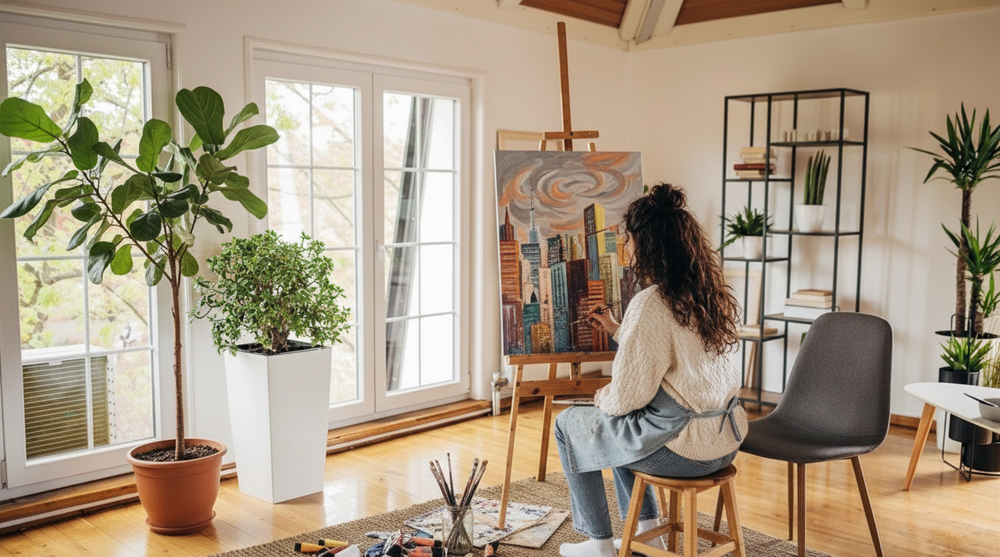
Every ArtiQuo piece begins as raw canvas or plaster on an artist’s table, not a printer bed. That distinction is the difference between decor and original art — each layer of texture, pigment, and brushwork is applied and shaped by hand, which is why no two finished pieces are ever exactly alike.
Styling Wabi Sabi Art Room by Room
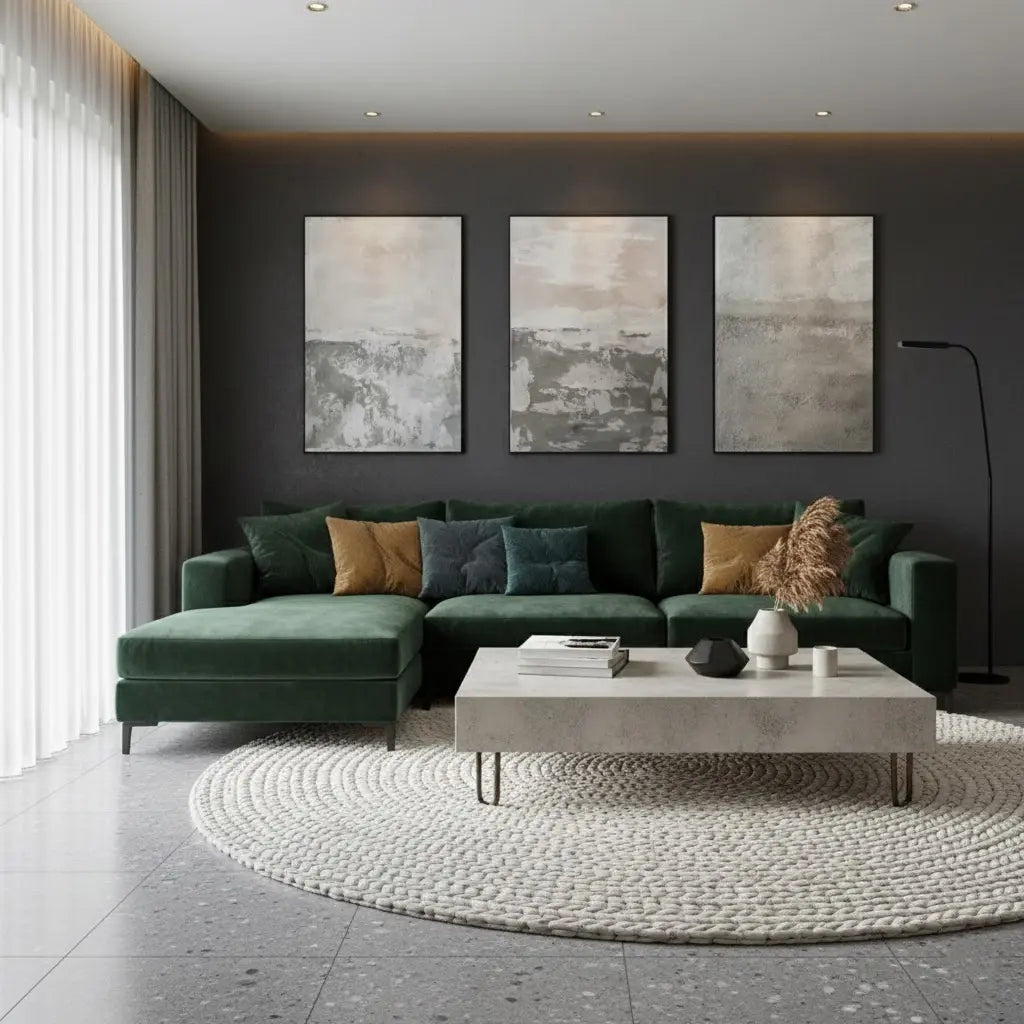
Living room: Hang a large textured piece above the sofa or media console as a grounding focal point that softens the straight lines of modern furniture.
Bedroom: Choose a smaller-scale, softer-toned piece to bring warmth to a space meant for rest, without adding visual noise.
Entryway: A wabi sabi piece near the front door sets a calm, intentional tone the moment someone steps inside.
Home office: Textured, earthy art adds depth to a space that can otherwise feel sterile or purely functional.
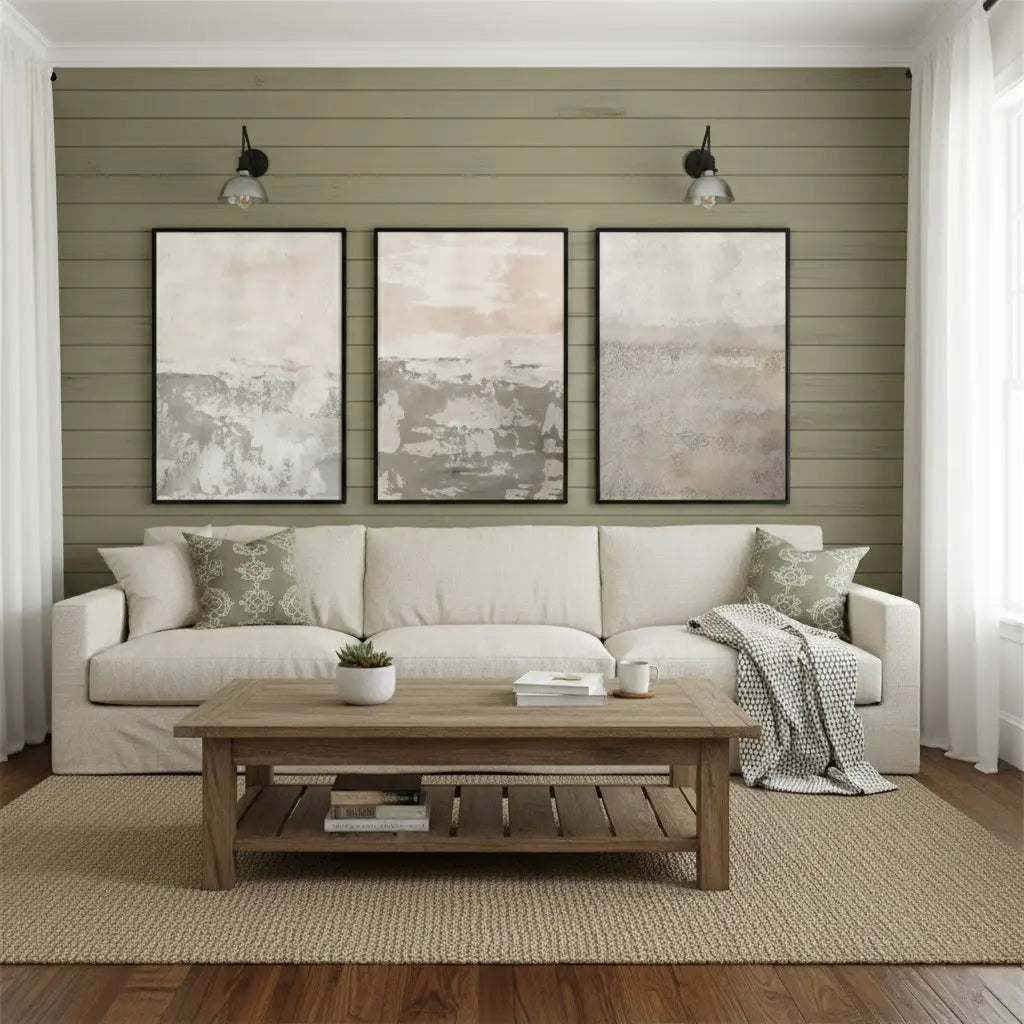
Dining area: An abstract or textured piece above a console or sideboard gives a gathering space quiet, conversation-worthy character. A set of three, like ArtiQuo’s PB250 collection, works especially well as a cohesive gallery wall.
How to Choose the Right Piece
- Think mood before color. Wabi sabi pieces bring stillness; more dynamic abstract works add energy and movement.
- Size up, not out. In a minimalist space, one large piece typically has more visual impact than several small ones.
- Let texture lead. In pared-back rooms, texture becomes the design detail that carries the space.
- Don’t second-guess the imperfections. A crack, raw edge, or unfinished-looking surface is the wabi sabi philosophy working as intended, not a flaw.
Frequently Asked Questions
Is wabi sabi art the same as abstract art?
Not exactly. Wabi sabi is a philosophy centered on imperfection and natural aging, while abstract art is a style defined by non-representational form. The two are often combined — a piece can be abstract in composition and wabi sabi in material and finish.
Does wabi sabi art suit every minimalist home?
It suits most neutral, minimalist, Scandinavian, Japandi, and organic modern interiors, since its earthy palette is designed to blend rather than compete. It’s less suited to highly saturated, maximalist, or glossy contemporary spaces.
How do I care for textured or plaster-based wabi sabi art?
Keep it away from direct moisture and high-humidity rooms, dust gently with a soft dry cloth, and avoid harsh cleaning products on the textured surface.
Is handcrafted wabi sabi art worth the investment over printed wall art?
Because each piece is individually made using natural materials, no two are alike — you’re buying an original rather than a mass-produced reproduction, and the materials are chosen specifically to age well over time.
Bring Wabi Sabi Into Your Home
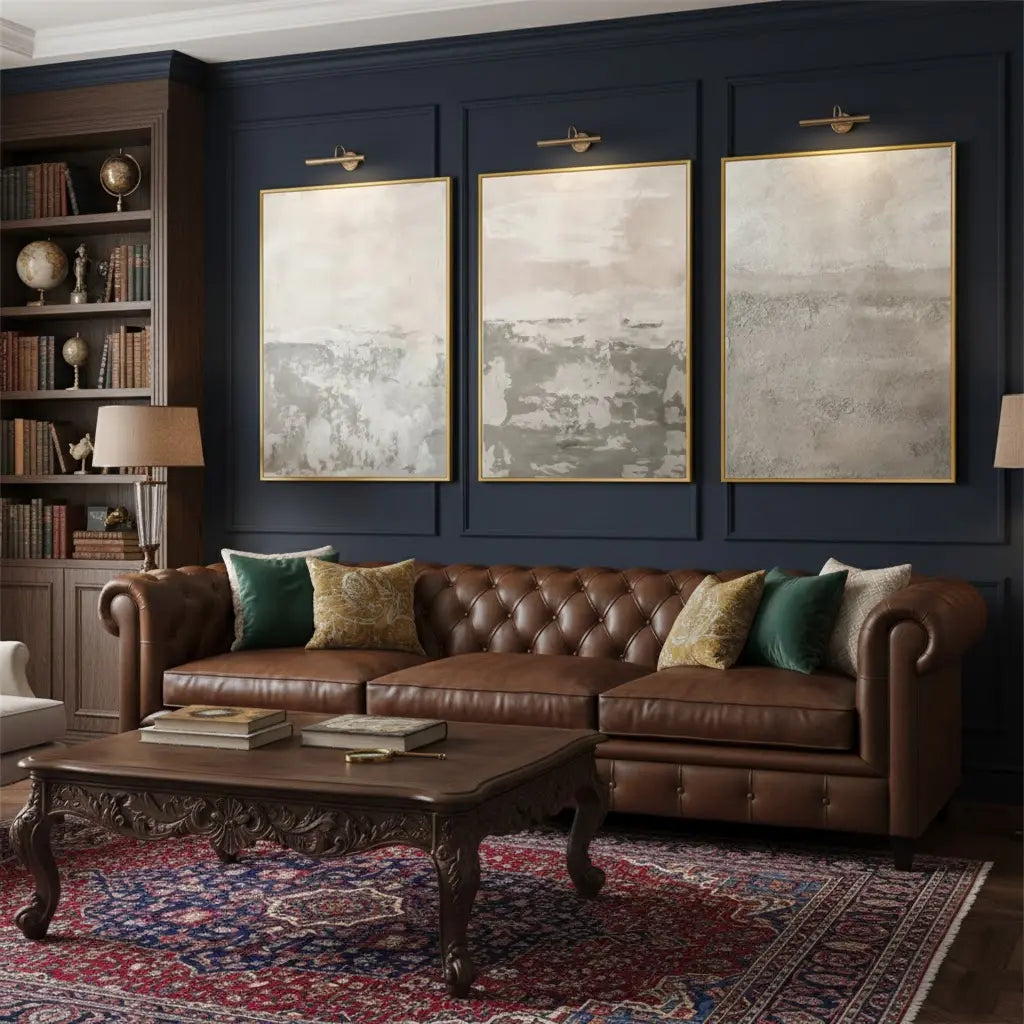
Wabi sabi art isn’t a passing trend — it’s a design philosophy that ages the way minimalist homes are meant to: quietly, gracefully, and with more character over time. If you’re ready to add an original, handcrafted piece to your space, explore the full Wabi Sabi Wall Art collection at ArtiQuo — one-of-a-kind, made by hand, and designed for modern living.