

How to Choose Abstract Wall Art for a Minimalist Living Room (2026 Guide)
How to Choose Abstract Wall Art for a Minimalist Living Room
Palette, scale, texture, and placement — a practical 2026 guide to hanging abstract and wabi sabi art in a pared-back room.
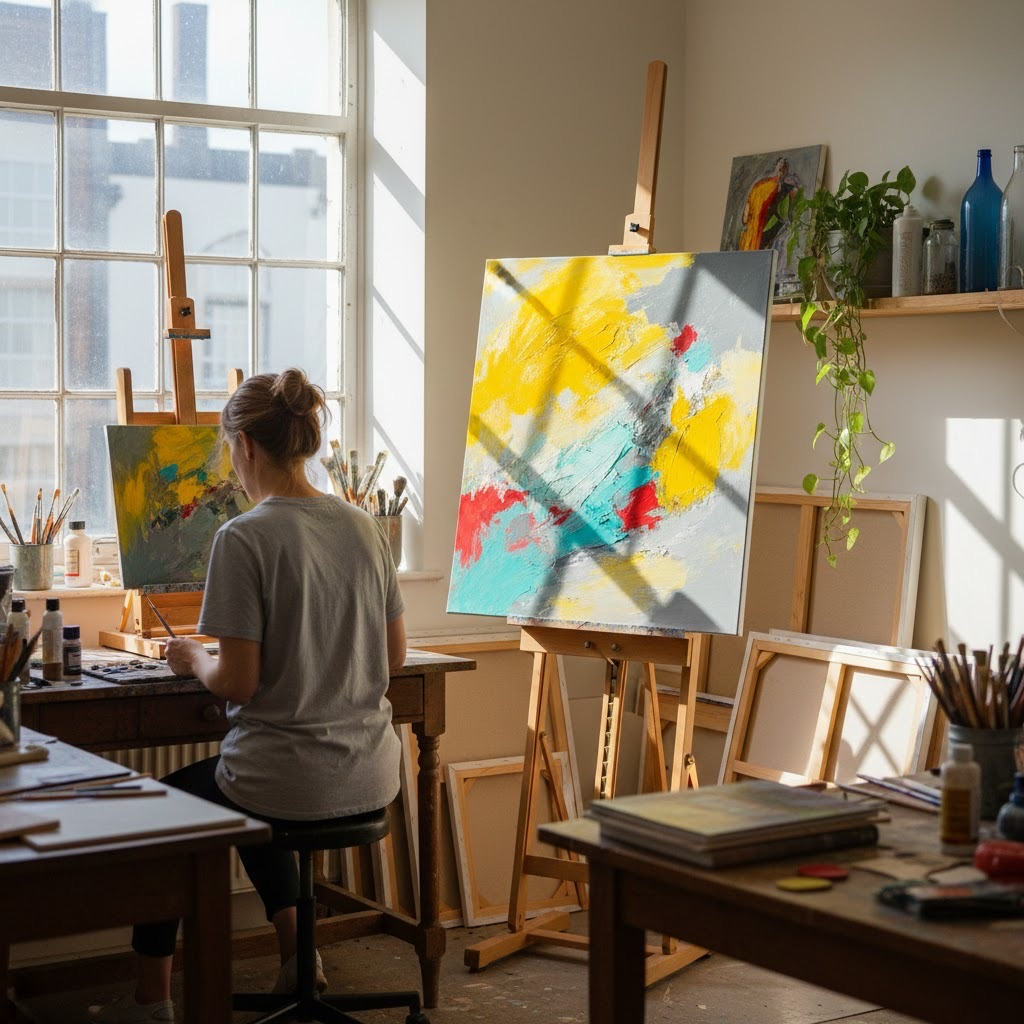
A minimalist living room isn't an empty one — it's an edited one. And nothing tests that editing more than the choice of wall art. Pick the wrong piece and even a carefully curated room feels cluttered or cold. Pick the right one, and a single canvas can carry the entire mood of the space.
Quick answer: the best abstract wall art for a minimalist living room shares three traits — a restrained, neutral color palette; one dominant focal point rather than busy detail; and texture or brushwork that adds depth without adding visual noise. Handcrafted abstract and wabi sabi wall art tends to check all three boxes, since it's built around muted, earthy tones and organic texture rather than sharp graphic pattern.
01Start with palette, not subject matter
In a minimalist room, color does more work than subject matter. Before you fall for a composition, check whether its palette matches your walls, floors, and furniture.
- Soft whites and warm greys keep a room feeling airy and open.
- Sandy taupes and muted ochres add warmth without breaking the neutral scheme.
- Deep charcoals and black work best as a single grounding accent, not a dominant tone.
Avoid saturated primary colors or high-contrast graphic prints — they read as "statement decor" rather than minimalist design, competing with the room instead of settling into it.

02Size up, not out
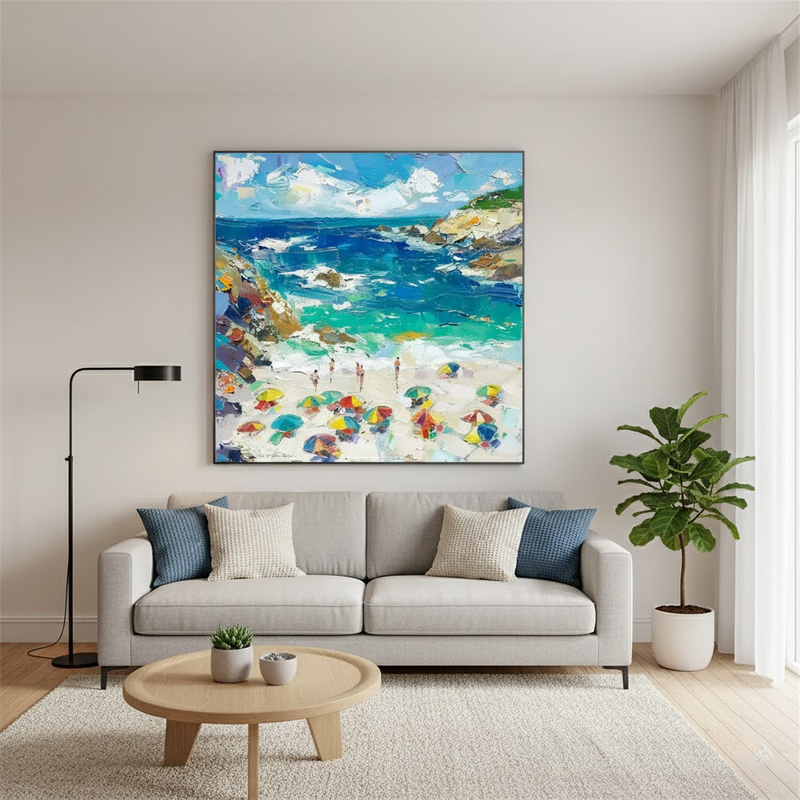
One of the most common mistakes in minimalist rooms is choosing art that's too small. A modest canvas on a large wall reads as an afterthought. In minimalist interiors, one oversized piece almost always outperforms a cluster of smaller ones — it gives the eye a single place to land, which is the entire point of a pared-back room.
A simple rule of thumb: your art should span roughly two-thirds of the width of the furniture it hangs above — a sofa, console, or bed frame — and sit 6 to 8 inches above it.
03Let texture replace pattern
Minimalist rooms are often accused of feeling flat or sterile. Texture is the fix — and it's why textured, plaster-based abstract pieces have become so popular in 2026 interiors. A raw canvas or lime-plaster surface catches light differently throughout the day, adding depth and movement without introducing pattern or clutter.
This is the core idea behind wabi sabi, the Japanese aesthetic philosophy centered on imperfection, asymmetry, and natural aging. Rather than hiding a crack or an uneven edge, wabi sabi treats it as the point — a reminder that beauty doesn't require flawlessness. Paired with abstract minimalism, it creates art that feels calm and textural rather than sterile or mass-produced.
04Match the piece to the room's mood
Before choosing, decide what you want the room to feel like.
| If you want the room to feel… | Choose… |
|---|---|
| Calm, grounded, restful | Wabi sabi textured pieces in muted tones |
| Dynamic, energizing, conversational | Bolder abstract brushwork with more movement |
| Warm and tactile | Raw plaster or clay-textured canvases |
| Cool and architectural | Black-and-white or monochrome minimalist pieces |
There's no wrong answer — but being intentional about mood keeps a minimalist room from feeling generic.
05One statement piece, or a considered set
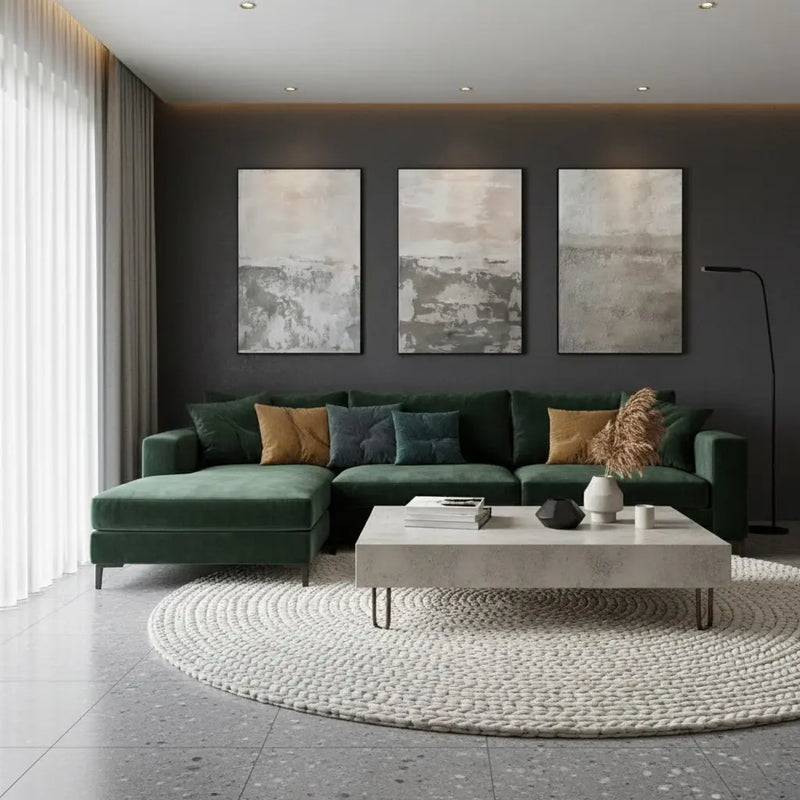
Minimalist doesn't mean "one item only" — it means nothing on the wall is accidental. A large single canvas works well above a sofa or media console as a focal point. A set of two or three smaller, related pieces can work in a dining area or entryway, as long as they share a consistent palette and don't compete visually with each other.
06Think about where — not just what
The same piece can feel completely different depending on where it hangs.
- Above the sofa — the classic minimalist anchor point; go large and let it ground the seating area.
- Entryways — a smaller, textural piece sets the tone the moment someone walks in.
- Home offices — abstract art adds warmth to a space that can otherwise feel purely functional.
- Bedrooms — softer, muted wabi sabi pieces support rest rather than stimulation.
07Choose handcrafted over printed when you can
Printed canvases are cheaper, but in a minimalist room — where every element is visible and nothing hides behind clutter — the difference between a print and a handcrafted original shows up quickly. Handmade abstract and wabi sabi pieces carry natural variation in pigment, texture, and surface that a printed reproduction can't replicate, and that variation is often what makes a minimalist wall feel considered rather than staged.

Frequently asked questions
What colors work best for abstract art in a minimalist living room?
Neutral, earthy tones — soft white, warm grey, taupe, charcoal, and muted ochre — work best because they blend into the room rather than compete with it.
Should I choose one large piece or several small ones?
For most minimalist living rooms, one large piece has more visual impact than several small ones. Size up before considering additional pieces.
What is wabi sabi wall art?
Wabi sabi wall art is rooted in a Japanese design philosophy that embraces imperfection, asymmetry, and natural aging. Textured, handcrafted surfaces — often made with raw canvas, lime plaster, or organic pigments — are central to the style.
Does textured or plaster art work in a minimalist space?
Yes. Texture adds depth to minimalist rooms without introducing pattern or clutter, which is why plaster and textured abstract pieces have become a popular way to keep a pared-back room from feeling flat.
How high should I hang abstract art above a sofa?
Roughly 6 to 8 inches above the furniture, with the art spanning about two-thirds of the sofa or console width.
Bring home something real
Explore ArtiQuo's handcrafted abstract and wabi sabi wall art — made by hand, in small batches, with soul over sameness at the core of every piece.
Shop the Collection